
• Skip to primary navigation
  • Skip to main content
Collective

Collective

A blog to help freelancers with taxes - Collective

What we offer

Business setup Form your business the right way Accounting Expert approved, powered by AI Invoicing Get paid faster, without the busywork Payroll Payroll made simple for S Corps Taxes Stress-free taxes for solopreneurs Business insurance Coverage for your business Health insurance Instant and affordable health coverage Support Human expertise + AI speed
Pricing Customers
About us Partnerships Careers We're hiring! Press
Blog Newsletter Webinars

Free tools

S Corp tax savings calculator Estimated tax & extension calculator Tax calendar S Corp admin cost calculator Freelance rate calculator Bill rate calculator
See all free tools →
Login
Business setup Accounting Invoicing Payroll Taxes Business insurance Health insurance Support
Pricing
Customers
About us Partnerships Careers We're hiring! Press
Blog Newsletter Webinars S Corp tax savings calculator Estimated tax & extension calculator Tax calendar S Corp admin cost calculator Freelance rate calculator Bill rate calculator See all free tools
Login
Resources / Guides / Florida · 7 min read

How to Start an LLC in Florida:
A Step-by-Step Guide

Start an LLC in Florida with our easy step by step guide. Learn the benefits, filing process, and steps to form an LLC in Florida today!

Collective Editorial Team
Written by Collective Editorial Team
Eric Poole
Updated by Eric Poole
Published Feb 13, 2023 · Last updated Feb 20, 2025
On this page 1 sections
  1. Starting an LLC in Florida FAQs

AI Summary

AI-generated from this article. Not tax advice.

  • Florida is one of nine U.S. states with no personal income tax, and the standard processing time to form an LLC there is six to eight business days.
  • Filing Articles of Organization carries a $125 filing fee for domestic LLCs; reserving a business name costs $25 and holds it for 120 days.
  • Florida requires a Registered Agent who is over 18 with a physical Florida address; Registered Agent services average around $100 per year, ranging from $49 to $399.
  • An annual Statement of Information is due between January 1st and May 1st with a $138.75 filing fee; filing late results in a $400 fine.
Quick links
Starting an LLC in Florida FAQs
Why Start an LLC in Florida?
What are the Steps to Starting an LLC in Florida?
How much does an LLC cost in Florida?
Does Collective Help with Starting an LLC in Florida?

Starting an LLC in Florida FAQs

Why Start an LLC in Florida?

If you’re in Florida, or planning to move your business to Florida, there are plenty of great reasons for starting an LLC in Florida. Florida has a low tax burden, being one of nine states in the U.S. that don’t have a personal income tax, making it an attractive state for pass-through entities such as LLCs and S corporations. And while processing times are never guaranteed,  the standard processing time to form an LLC in Florida is six to eight business days, which is relatively fast compared to other states.

(image source: https://en.wikipedia.org/wiki/Seal_of_Florida

A Florida Limited Liability Company (LLC) is a type of private limited company in the United States, which is any type of business entity in private ownership. This means the company is owned by its founders and management and is therefore not beholden to shareholders.

So what are the benefits of starting an LLC in Florida? Compared to other business structures, LLCs have a relatively simple, flexible, low-cost structure that offers tax benefits and personal liability protection. See our ultimate guide for How to Start an LLC for a full breakdown of the advantages of LLCs and how they compare to other business structures. 

So if you’ve ever wanted to know how to create an LLC in Florida, this simple guide for how to start an LLC in Florida shares all the important steps, requirements, state fees and costs you’ll need during the LLC formation process.

What are the Steps to Starting an LLC in Florida?

Forming an LLC in FL is a very straightforward process. There are 10 simple steps for how to get an LLC in Florida:

Step 1: Name Your Florida LLC

The first step to creating an LLC in Florida is to choose a name that is distinct, memorable, and, most importantly, available, and one that adheres to Florida naming rules. Your LLC’s name cannot have the same name as existing business entities in Florida. Search the Florida Division of Corporations’ entity name database to ensure that your chosen name is not already in use.
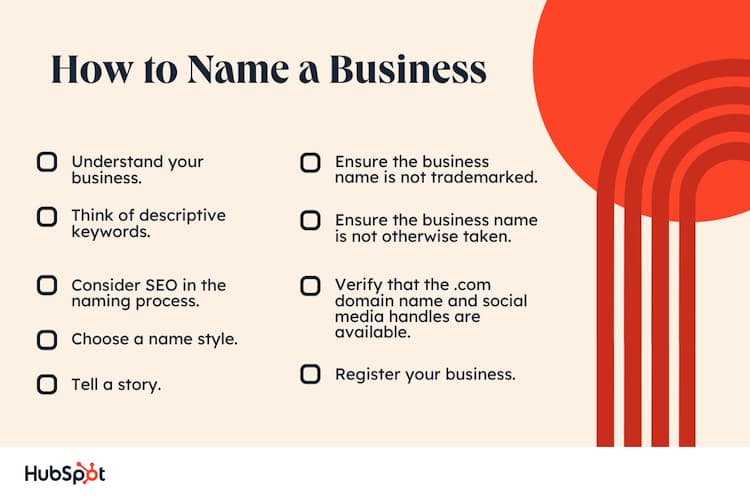
(image source: https://blog.hubspot.com/sales/business-name-ideas)

If your name is available, you can mail a letter specifying the name to be reserved and the name and address of the applicant to the Florida Secretary of State. Include the $25 filing fee. This reserves your name for 120 days.

Once you’ve established that your name is available, there are a few naming requirements to start an LLC in Florida. Review our guide to naming an LLC in Florida to ensure that it meets all of the state’s requirements.

Step 2: Designate a Registered Agent

If you want to form an LLC in Florida, you must choose a Registered Agent in Florida. An owner or an employee may serve as the Registered Agent for LLCs in Florida. To qualify as a Registered Agent in Florida, the individual must be over the age of 18, have a physical address in Florida that serves as the registered office, and must be on-site at the registered office and available to accept documents during regular business hours. This address can be the same as your business’s address. 

You may also choose to employ a Registered Agent service in Florida, which will have additional fees. A Registered Agent service provides a physical address in Florida if none of the LLC owners or members have a physical Florida address. The average cost of using Registered Agent services in Florida is around $100, but can be as little as $49 per year and as much as $399 per year.

Step 3: File Articles of Organization

The next step to setting up an LLC in FL is to submit official formation documents, also known as Articles of Organization. In submitting your Articles of Organization, you will need to provide: your LLC name and principal business address, name and address of your registered agent (PO Box will not be accepted), names and addresses of all LLC members, name and address of the manager (if there is one), the function of your LLC, your LLC’s intended duration, and management structure.

The person forming the LLC and the Registered Agent must sign the Articles of Organization. 
There is a $125 filing fee for domestic LLCs. If it’s accepted, you’ll receive a certificate of formal registration. See our Articles of Organization LLC Template to make sure you don’t miss anything.

Get help with your FL formation

Step 4: Create an Operating Agreement

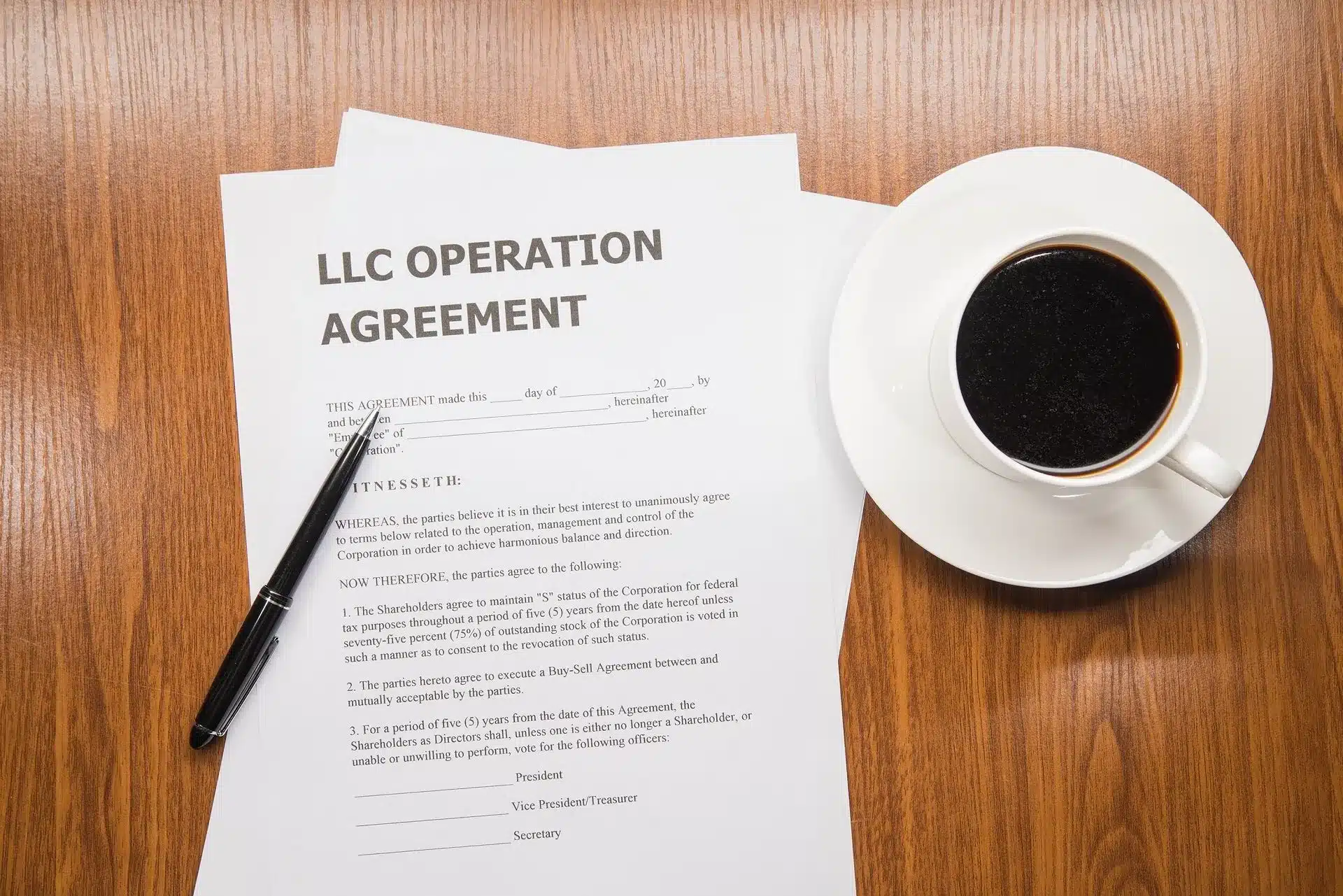
While Florida doesn’t mandate the creation of an Operating Agreement, it is still a highly valuable practice if you want to set up an LLC in Florida. An Operating Agreement is a written document that outlines and ensures that all members understand and agree to their designated rights and responsibilities. See our LLC Operating Agreement Template to make sure you’re including all the essentials. An attorney should be consulted for more complex operations.
(image source: https://www.floridataxlawyers.com/the-benefits-of-llc-in-florida-for-small-business-owners)

Step 5: Receive a Certificate From the State

The next step in registering an LLC in Florida is receiving the certificate of formation. After an LLC’s formation documents have been filed and approved, the Florida Department of State will send you a certificate that formally confirms the existence of your LLC. The state will mail this certificate to the Florida mailing address you provided. This certificate will enable the LLC to get an Employer Identification Number (EIN), business licenses, and open a business bank account.

Step 6: Get an Employer Identification Number

The next step to starting an LLC in Florida is getting your tax ID number. The Internal Revenue Service (IRS) will assign you an Employer Identification Number (EIN) in order to identify your LLC for taxes. An EIN, sometimes referred to as a Federal Employer Identification Number (FEIN) or Federal Tax Identification Number (FTIN), is nine digits and enables an LLC to file and manage taxes at the state and federal level, open a business bank account, and hire employees. You can obtain an EIN for free via the IRS online portal.

Step 7: Get a Florida Business License

The next step for how to register an LLC in Florida may involve additional licensing. Depending on the nature of your LLC, you may need to apply for a Florida business license. Check the U.S. Small Business Administration to see if your business activity is listed and requires a license, then contact the issuing agency for further details.

Step 8: Open a Florida Bank Account

If you want to register your LLC in Florida, you’ll need to link it to a bank account next. LLCs in Florida are required to have a bank account in Florida. You will need to provide the bank with your EIN and Articles of Organization in order to open a new business account in Florida. Remember, one of the main advantages of an LLC is protecting the business owners’ personal assets from business debts and lawsuits, so make sure that you’re always keeping business resources separate from your personal resources.

Step 9: Comply With Employer Obligations

Starting an LLC in Florida also requires complying with certain employer obligations. If your Florida LLC has employees, you must: purchase workers’ compensation insurance as soon as the fourth person is hired, pay unemployment taxes, and report new employee hires or rehires within 20 days to the Florida Department of Revenue.

Step 10: File a Statement of Information Annually

Now that you know how to apply for an LLC in Florida, you’ll need to ensure your LLC’s paperwork stays current. Once your LLC has been formed, file a statement of information every year as early as January 1st, but no later than 11:59 p.m. on May 1st. You can file online and there is a $138.75 filing fee. 

Failure to file an annual report on time will result in a $400 fine. You will need to provide the 6- or 12-digit document number that was assigned to your entity when the business entity was filed or registered with the Division of Corporations. You can look up your document number via the Florida Division of Corporations entity name search.

How much does an LLC cost in Florida?

How much is an LLC in Florida altogether? The cost to start an LLC in Florida is relatively low compared to other states. Here’s a roundup of the costs we’ve discussed so far to register an LLC in Florida:

  • Business Name Reservation filing fee: $25
  • Articles of Organization filing fee – $125
  • Annual Statement of Information filing fee – $138.75 filing fee

Does Collective Help with Starting an LLC in Florida?

You now know the steps for how to start an LLC in Florida! But if all those lists and paperwork sound overwhelming, consider letting Collective do the heavy lifting for you. We offer a smarter, more affordable way to get your LLC set up and running. We take care of your LLC formation, monthly bookkeeping, accounting, taxes, and more. 

Start your LLC with Collective and see how much you can save.

Our website contains general information only and this information is not to be taken as legal, tax, or financial advice. You should consult with your attorney and/or tax advisor to get answers to your specific questions.

Get help with your FL formation

Collective handles the tax and accounting side of your business – so you have more time to focus on your passion. LLC formation, S Corp election, bookkeeping, monthly financial reporting and an average member tax savings of $10,000*.

Get Started

Common questions

How Much Does It Cost to Form an LLC in California?

Since you only need to form your LLC once, you’ll only pay the fees associated with forming the LCC one time. Here’s a list of fees you’ll pay to start your LLC in California:

Filing fees

You’ll pay two filing fees to form an LLC in California:

A $70 fee to file articles of organization with the California Secretary of State’s office
A $20 fee to file a Statement of Information, Form LLC-12, with the California Secretary of State.

LLC name costs

Although this is optional, you might choose to pay a $10 fee in order to reserve your preferred LLC name with the Secretary of State.

This prevents another business from registering the same name or a similar name before you have the chance to register your business. It’s also recommended that you conduct a trademark search to make sure that your LLC name doesn’t violate someone else’s trademark rights.

Costs of creating an operating agreement

Even though an operating agreement isn’t legally required, it’s highly recommended that you have one written for your LLC.

The best part is that there might not even be an additional cost involved with getting this done, especially if you join Collective. We provide you with a free LLC operating agreement that’s been written by a professional attorney.

If you decide to write your own customized operating agreement with the help of a lawyer, it could cost anywhere from $500 to $1,000.

Paperwork costs

The simple act of completing and filing all of the required paperwork for your LLC also comes with some costs.

Hiring an attorney to help you fill out and file your paperwork can cost a lot, with averages ranging from $500-$1,000.

Business license fees

Depending upon the nature of your business and where it’s located, you might also need to get a local business license from your city or county.

The cost varies widely, but for a small business, it’s usually $50 to $100.

How Much Does It Cost to Maintain an LLC in California?

Your work isn’t done—and you aren’t done paying fees—once your LLC is formed. Now you need to deal with ongoing maintenance expenses. It’s all just part of doing business.

Cost of registered agents

Having a registered agent, who will accept court papers and other important documents on your LLC’s behalf, is a great idea. The annual cost of having a registered agent is typically $75 to $150.

Statement of Information costs

Even after your business is up and running, you’ll be required to file a new Statement of Information with the California Secretary of State every two years. With that comes a $20 filing fee, so be sure to mark your calendar and set aside some money in your budget to take care of this.

Business license fees

Yep, we’re talking about business license fees again, because it doesn’t always end after you get your business license and paying the upfront fee. Oftentimes, you also have to periodically renew your business license. And that means paying a renewal fee.

Whether you have to renew your business license every year or more or less often, setting aside the money to pay the fee is a smart move.

Fictitious Name Statement fees

If you filed a fictitious name statement then you’ll need to renew that statement every five years. So, in addition to paying the fee for your first fictitious name statement, be prepared to pay the fee again when you need to renew it.

What About Taxes?

Taxes are another thing to consider when it comes to calculating the costs of running an LLC in California. And you can’t avoid them, even if you form your LLC in another state.

Even if you form your LLC in another state, if your LLC is located in California, you’ll have to register your out-of-state LLC in order to to do business in California. On top of that, you’ll be required to pay the same taxes and fees as any other California LLC.

Here’s the gist: California imposes special taxes and fees on LLCs that are organized in the state. LLCs are subject to two different taxes, both of which are paid to the California Franchise Tax Board.

Which LLC Costs Are Tax Deductible?

The good news is that all of these LLC costs are tax-deductible.

You can deduct up to $5,000 of the costs of forming your LLC in a single year. This includes:

The cost of completing articles of organization

LLC filing fees

The costs of drafting an LLC operating agreement

Attorney fees

Other fees you incur for setting up your business

Tags:
  • Guides
  • LLC

More on Business Formation

All Business Formation posts
Business Formation

S Corp Election Deadline: How and When to File Form 2553

For an existing business on a calendar year, the S Corp election deadline is…

Oct 8, 2026 · 9 min read
Business Formation

What Is an S Corp? A Complete Guide for Freelancers & Self-Employed

An S Corp is a federal tax status that a corporation or LLC can…

Oct 8, 2026 · 10 min read
Business Formation

How To Start an S Corp: A Step-by-Step Guide for the Self-Employed

An S Corp starts as a legal entity, not a company you build from…

Aug 19, 2026 · 10 min read
Business Formation

Simple Steps To Forming an LLC in Georgia: Your Comprehensive 2025 Guide

Are you thinking about taking control of your career and building something of your…

Jun 4, 2025 · 7 min read
Business Formation

How to Pay Yourself as a Business Owner (Without Wrecking Your Finances)

Never pay your rent from your business bank account.It sounds obvious, right? But countless…

Jun 2, 2025 · 7 min read
Business Formation

S Corp Application Form (2553)

Special Note: Only Real Pen Ink Signatures Allowed Overview Form 2553 is a foundational…

Dec 10, 2024 · 2 min read
Business Formation

How to Start an S Corp in New York

As a NY business owner, if you’re looking for a way to mitigate your…

Jun 26, 2024 · 12 min read
Business Formation

Owner’s Draw vs. Salary: Paying Yourself as a Business Owner

The way you set up your business has a ripple effect. Impacting everything from…

Jan 22, 2024 · 15 min read
Business Formation

Texas S Corp: What You Need to Know

If you call the Lonestar State home, or are considering moving there – well…

Jan 2, 2024 · 7 min read
Business Formation

S Corp in Florida: Is It the Right Choice for Your Business?

Like most solopreneurs in Florida, or elsewhere, you’re passionate about your business. After all,…

Nov 29, 2023 · 7 min read
Business Formation

What is an LLC?

An LLC, or Limited Liability Company, is a legal business structure that combines the…

Aug 17, 2023 · 10 min read
Business Formation

What is Accounting?

Accounting Definition What is accounting? Accounting is the process of recording, summarizing, analyzing, and…

Jul 14, 2023 · 8 min read
Business Formation

What is an EIN Number?

EIN (Employer Identification Number) Definition What is an employer identification number? An Employer Identification…

Jul 13, 2023 · 7 min read
Business Formation

Guide to Small Business Expense Tracking

So you’ve figured out how to start an LLC or other small business venture.…

Apr 19, 2023 · 5 min read
Business Formation

How to Start an LLC in Maryland: A Step-by-Step Guide

Starting an LLC in Maryland FAQs Why Start an LLC in Maryland? If you’re…

Apr 4, 2023 · 8 min read
Business Formation

How to Start an LLC in Colorado: A Step-by-Step Guide

Starting an LLC in Colorado FAQs Why Start an LLC in Colorado? If you’re…

Mar 31, 2023 · 7 min read
Business Formation

How to Start an LLC in Washington State: A Step-by-Step Guide

Starting an LLC in Washington State FAQs Why Start an LLC in Washington State?…

Mar 7, 2023 · 8 min read
Business Formation

How to Start an LLC in Oregon: A Step-by-Step Guide

Starting an LLC in Oregon FAQs Why Start an LLC in Oregon? If you’re…

Mar 3, 2023 · 8 min read
Business Formation

How to Start an LLC in New Jersey: A Step-by-Step Guide

Starting an LLC in New Jersey FAQs Why Start an LLC in New Jersey?…

Feb 28, 2023 · 8 min read
Business Formation

How to Start an LLC in Texas: A Step-by-Step Guide

Starting an LLC in Texas FAQs Why Start an LLC in Texas? If you’re…

Feb 21, 2023 · 7 min read

About the author

Collective Editorial Team

Collective Editorial Team

The Collective Editorial Team is made up of writers, editors, and subject matter experts covering everything solopreneurs deal with — from tax, bookkeeping, and business formation to marketing, growing revenue, and the everyday realities of running a business solo. The team works closely with self-employed business owners to understand what they're actually navigating, and for technical content, leverages authoritative tax and regulatory sources to keep it accurate and current.

All articles by Collective Editorial Team

Best for S Corp owners

Payroll, books and filings in one membership

LLC Tier $199/mo · S Corp Tier $349/mo

Related

  • 10 Tax Mistakes That Cost Freelance Designers Thousands (and How to Fix Them)
  • 1099 Taxes: A Complete Guide for Freelancers & Contractors
  • Accounting and Tax Guide for Doctors

Latest

  • A New Era of Entrepreneurship
  • Collective Raises $100M for Full Stack AI Financial OS Powering the Solopreneur Revolution
  • The Vampire Expenses Draining Your Business

We’re glad you’re here!

First, tell us about your business

Net profit = Total revenue - total expenses

  1. Find total revenue. Add up all money your business earned from sales of goods or services during the year.
  2. Subtract your expenses. Deduct all business costs like supplies, rent, utilities, software, contractor payments, and loan interest.

An estimate is fine, you don't need exact figures.

W2 employees are people on your payroll

You withhold income tax, Social Security, and Medicare from their paychecks, and they get a W-2 form from you at the end of the year.

Don't count yourself (even if you pay yourself a salary) or 1099 contractors and freelancers.

I agree to Collective Terms of Service & Privacy Policy. Additionally, by providing phone number to continue, I agree to receive calls, incl. autodialed or prerecorded sales calls, from Collective.

Collective logo

We are experts in the unique needs and challenges of self-employed people and know that our confidence gives others confidence, too. Reach out to say hello and join our team.

We are experts in the unique needs and challenges of self-employed people and know that our confidence gives others confidence, too. Reach out to say hello and join our team.

Products

  • Business setup
  • Accounting
  • Invoicing
  • Payroll
  • Taxes
  • Business insurance
  • Health insurance
  • Support
  • Late S Corp election

Company

  • Home
  • Pricing
  • About us
  • Careers
  • Contact us
  • Partnerships

Resources

  • Blog
  • Guides
  • Help center
  • Testimonials
  • Press
  • Create with us

Legal/Support

  • FAQ
  • Terms of service
  • Privacy policy
  • Security policy

Compare

  • Compare all
  • Collective vs Lettuce
  • Collective vs LegalZoom
  • Collective vs TurboTax
  • Collective vs ZenBusiness

Collective provides a suite of tools, back-office support, and general information. Our services are not intended as tax, legal, or professional advice.

* Savings estimates reflect the average 2023 federal self-employment (SE) tax savings for Collective members with an S Corp tax election, based on business profits that would've otherwise been subject to SE tax. Actual savings will vary based on individual circumstances.

** Based on data sourced from Shopify blog, QBO Essentials, QBO Live, Gusto, Taxfyle, Intuit "Tax Pro" Research, LegalZoom and JustAnswer.com as of August 2025.

† Individual tax return packages are billed as an annual, one-time add-on fee.

© 2026 Collective Hub, Inc. All rights reserved